As a species, we are social beings who live out our lives in the company of other humans. We organize ourselves into various kinds of social groupings, such as nomadic bands, villages, cities, and countries, in which we work, trade, play, reproduce, and interact in many other ways. Unlike other species, we combine socialization with deliberate changes in social behavior and organization over time. Consequently, the patterns of human society differ from place to place and era to era and across cultures, making the social world a very complex and dynamic environment.


Outcomes/Results
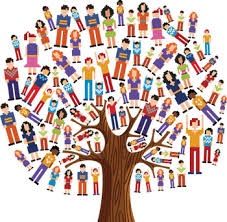
Each person is born into a social and cultural setting—family, community, social class, language, religion—and eventually develops many social connections. The characteristics of a child’s social setting affect how he or she learns to think and behave, by means of instruction, rewards and punishment, and example. This setting includes home, school, neighborhood, and also, perhaps, local religious and law enforcement agencies. Then there are also the child’s mostly informal interactions with friends, other peers, relatives, and the entertainment and news media. How individuals will respond to all these influences, or even which influence will be the most potent, tends not to be predictable. There is, however, some substantial similarity in how individuals respond to the same pattern of influences—that is, to being raised in the same culture. Furthermore, culturally induced behavior patterns, such as speech patterns, body language, and forms of humor, become so deeply imbedded in the human mind that they often operate without the individuals themselves being fully aware of them.
Every culture includes a somewhat different web of patterns and meanings: ways of earning a living, systems of trade and government, social roles, religions, traditions in clothing and foods and arts, expectations for behavior, attitudes toward other cultures, and beliefs and values about all of these activities. Within a large society, there may be many groups, with distinctly different subcultures associated with region, ethnic origin, or social class. If a single culture is dominant in a large region, its values may be considered correct and may be promoted—not only by families and religious groups but also by schools and governments. Some subcultures may arise among special social categories (such as business executives and criminals), some of which may cross national boundaries (such as musicians and scientists).